
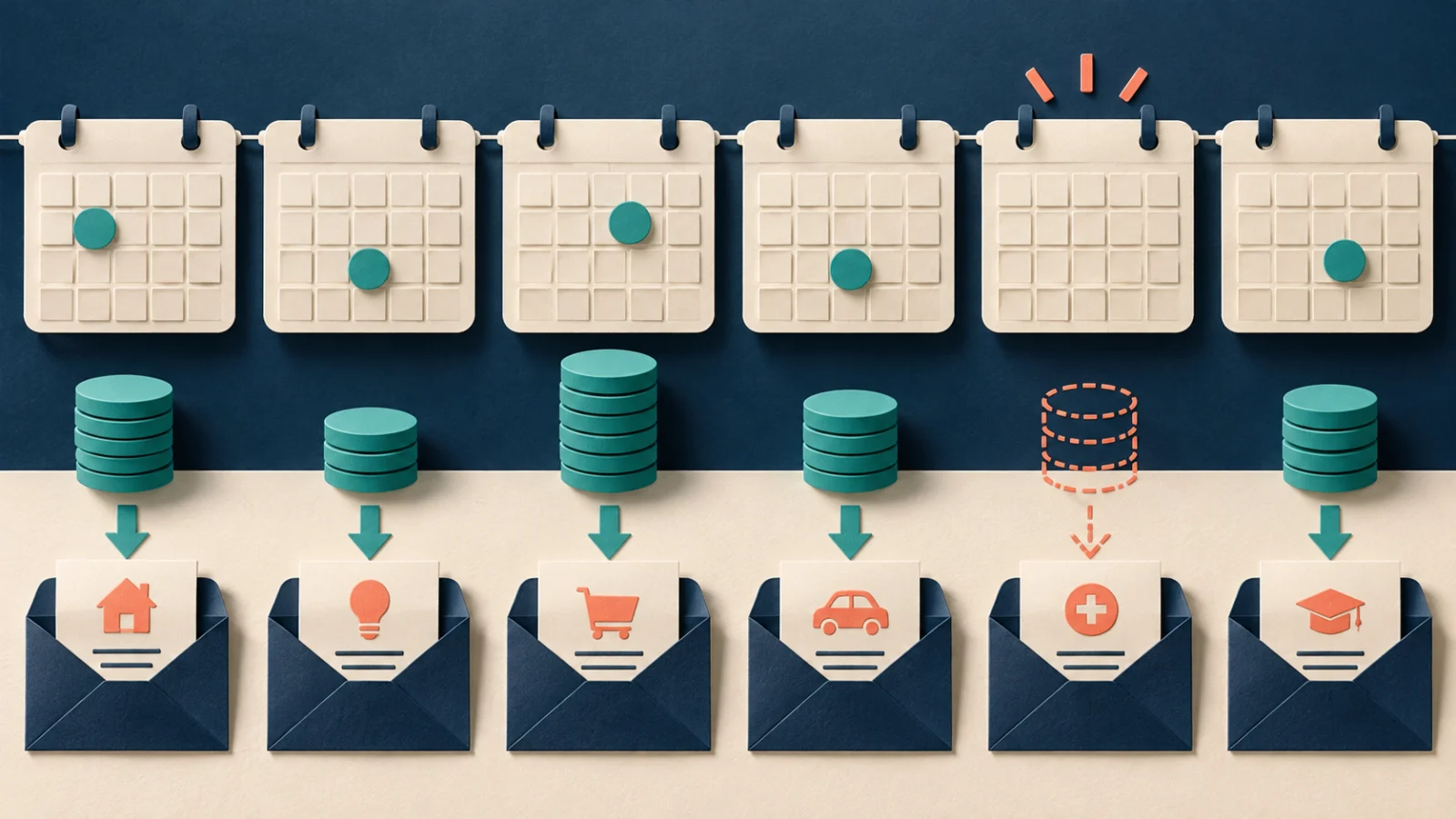
A budget answers two related questions: whether planned outflows fit available income and whether money will be available when each payment occurs. A positive monthly total does not prevent a shortfall in the middle of the month. Keep the amount and timing views together rather than treating either as a complete plan.
Begin with usable income
List amounts you reasonably expect to receive and when they arrive. Separate confirmed income from uncertain possibilities. If the amount varies, use a cautious working assumption and review it when better information becomes available.
Avoid mixing gross pay with spending amounts if deductions have not been accounted for. Identify what is actually available for the plan. For business or irregular work, tax obligations and other necessary reserves may require professional guidance rather than an improvised percentage.
Organize the outflows
Include recurring essentials, debt obligations, variable expenses and less frequent costs. An annual bill is still part of the plan even when it is not due this month. Consider a suitable set-aside rather than repeatedly treating predictable expenses as emergencies.
Use realistic categories that you can maintain. Excessive detail can make the system difficult to review, while a single broad spending line may hide important commitments. The useful level is the one that reveals an actionable decision.
Put the plan on a calendar
The CFPB's cash-flow tools emphasize seeing income and expenses across dates. Mark known due dates and compare them with incoming funds. If timing is difficult, ask the provider whether an appropriate due-date change is available; do not assume it is guaranteed.
Everyday Altitude's Budget Planner compares entered income and allocations, but a monthly total does not reproduce a bank ledger. Review pending transactions, actual account availability and the timing of payments separately. Do not enter account numbers or private identifying details into a general tool.
Review one useful adjustment
Compare the plan with actual activity and identify the reason for a difference. A missing expense, changed income or unsuitable timing each calls for a different response. Correct the assumption rather than labeling the entire process a failure.
Key takeaway: a useful budget is both an amount plan and a timing plan. Keep it simple enough to revisit, include known commitments and preserve uncertainty where income is variable. The purpose is a clearer decision, not a promise that a spreadsheet removes every financial constraint.
Sources & further reading
Source review: October 29, 2026. U.S.-focused general financial education, not individualized financial, legal, tax or insurance advice. Verify current documents and applicable rules. No real offer, eligibility result, professional review or guaranteed outcome is implied.